CWNS Basics
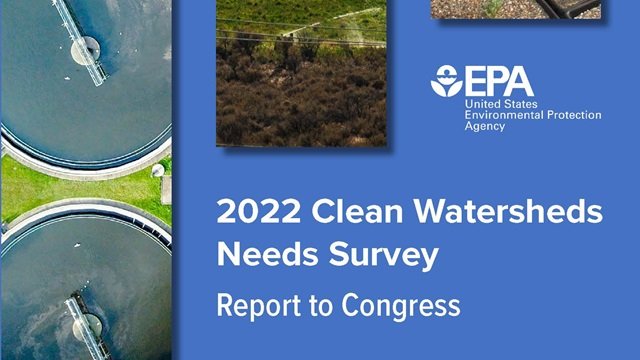
The Clean Watersheds Needs Survey (CWNS) is a national, congressionally mandated assessment of SRF-eligible capital needs for wastewater, stormwater, decentralized wastewater, and nonpoint source infrastructure. Starting with the first survey in 1972, CWNS data are compiled into a Report to Congress and influence national and state funding decisions in the Clean Water sector, including the stormwater sector. The CWNS collects technical data and cost data for all eligible water‑quality infrastructure projects over the next 20 years. For stormwater systems, this includes gray, green, and general stormwater management needs.
CWNS efforts were initially biennial from 1972 to 1992 when it was performed every four years until 2012. After 2012 there was a ten-year gap due to a lack of funds until the America's Water Infrastructure Act of 2018 provided funding that resulted in the 2022 CWNS. EPA is currently engaged in the next CWNS, which will occur throughout 2027.
Stormwater Needs in the CWNS
Needs for stormwater investment have been historically under-represented in the CWNS since these surveys started. For instance, in the 2012 CWNS only approximately 20% of MS4s providing information on needs. Some states were very engaged in this effort in 2012 while others were not engaged at all, which is reflected by the fact that only 4 states reported over 65% of the total overall needs in the country while 16 states reported no needs at all. The total identified funding needs over the next 20 years in the stormwater sector in 2012 CWNS was found to be $23.8, which is approximately $1.2B annually.
To put these figures in context, the 2022 CWNS identified a nearly 400% increase in stormwater needs as this survey reported stormwater needs to be $115.3B, which is approximately $5.8B annually. Did stormwater needs really increase by nearly four times between 2012 and 2022? No, clearly these needs have been there all along, but recent efforts have been made by EPA to more accurately capture these needs. NMSA and other organizations worked closely with EPA staff to support these efforts which successfully led the significant jump in identified stormwater needs. We need to work together in the stormwater sector to continue this momentum into the current CWNS effort.
Why Participation in the CWNS is Critical for the Stormwater Sector
The most important driver for the drive to capture accurate stormwater funding needs is that this a barometer for the federal government on funding needs in our sector. Without this clear and accurate expression of funding needs, it is likely that stormwater will not get the focus or funding from Congress that it merits. The current landscape of federal funding should provide this clarity, as the state funding allocation formula for the recently established Overflow and Stormwater Grants (OSG) program is directly tied to the results of the CWNS. In other words, the more needs identified by a state, the more funding will be provided.
Participation helps ensure your community’s stormwater needs are visible and counted. The CWNS is an important advocacy tool that gives a national platform to an often overlooked (yet critical) infrastructure need.
NMSA 2027 CWNS Support Initiative Overview
NMSA has been closely engaged with EPA staff to assist in the Agency’s goal to increase stormwater cost need data collected. For example, NMSA will be hosting a webinar in late 2026 to provide background information on the CWNS, present examples from states on how they plan on providing cost needs to EPA and discuss issues such as project eligibility and data collection format and processing. NMSA will continue to work with EPA throughout 2027 to increase awareness on this important topic and provide input on technical and process-related issues focusing on CWNS and stormwater needs through communication vehicles, such as webinars, newsletters, and updates to this webpage.
EPA CWNS Information
- EPA CWNS website: https://www.epa.gov/cwns
- EPA CWNS Data Dashboard: https://sdwis.epa.gov/ords/sfdw_pub/r/sfdw/cwns_pub/about
How to Ensure Your Community is Counted
Data entry is done by state-level teams led by a state coordinator. To be included, the project must be publicly owned and have a water quality benefit, location, project description, and cost estimate. If a cost estimate is not available, contact your state’s coordinator to see if a cost estimation tool can be used for your project.
Contact your state’s CWNS coordinator: https://www.epa.gov/cwns/state-cwns-program-contacts
2027 CWNS Important Dates
- September – December 2026: state teams participate in trainings, gather documents, and prepare for data entry
- January 4th – October 29th, 2027: Data collection is open for the 2027 CWNS
Additional scheduling information for the 2027 CWNS is available in the table below.
| Early 2026 | States secure survey support |
| June 2026 | Training for POTW data preparation and reconciliation |
| September 28, 2026 | Deadline for changes to pre-survey data |
| August-September 2026 | Additional CWNS trainings |
| October 2026 | EPA pulls small POTW sample |
| November 2026 | States confirm sampled POTW information |
| December 2026 | State Specific Approach (SSA) submission period begins |
| January 2027 | Refresher training |
| January 4, 2027 | Data entry begins |
| March 31, 2027 | SSA submittal period (new and template) ends |
| June 30, 2027 | Deadline for requests to adapt another state’s approved SSA |
| October 29, 2027 | Data entry closes |
| November 2027 | State Correction Requests (SCRs) and Data QA/QC |
For more information on the NMSA 2027 CWNS Support Initiative, please contact Seth Brown (NMSA) at seth.brown@nationalstormwateralliance.org.