Street sweeping technology has been used to clean streets and improve environmental quality in the U.S. for decades. The use of street sweeping technology to address stormwater runoff-driven pollution, however, has been limited due to the absence of unified recognition by state and federal regulatory agencies on the quantifiable treatment capacity of street sweepers. In a recent review of state stormwater permits, it was estimated that 40% of states have no information provided at all on street sweeping in the context of stormwater treatment. An additional 25% mention street sweeping in their statewide MS4 permit, but no specifics are provided. The remaining states have a mix of methods and approaches to provide recognition – albeit limited – on the water quality treatment capacity of street sweeping technologies. Many simply require sweeping as a condition of the permit, as part of a maximum extent practicable program. Of these states, only a handful of states have a clear crediting system or guidance (e.g. in stormwater manuals) for stormwater treatment through the use of sweepers. The way these states credit sweepers for stormwater treatment are not consistent with each other, but they do represent a starting point for the sweeper sector to build upon.
Research performed in a variety of settings and locations – Florida, Minnesota, California to just name a few states – illustrates the cost-effective value of sweepers used to address stormwater pollution as an effective source control non-structural practice. What is missing is the link between research efforts that show this value and the regulatory credit offered by state and federal regulatory agencies. This is particularly important where Total Maximum Daily Load requirements are written into MS4 permits. Quantified reduction of specific pollutants from street sweeping would be of value to MS4s that must comply with TMDL requirements.
An initiative - the Clean Streets = Cleaner Waters (CS=CW) Initiative - has been established to bridge the gap between research and policy and drive a broader adoption of power sweeper technologies to address stormwater pollution.
In the long-term, the vision of this initiative is to address the following action areas:
- To create a more consistent regulatory crediting landscape for street sweeping as a stormwater practice across the country.
- To drive awareness on the value of skilled street sweeping and power sweeper operators in addressing stormwater pollution.
- To provide a platform for credible and robust technology verification in the street sweeping industry on stormwater pollution reduction.
- To create a pathway to clear and practical metrics to quantify the capture of pollutants removed from roadways, parking lots and other paved surfaces.
- To explore technologies that can optimize street sweeping operations in the context of capturing stormwater pollutants.
- To promote holistic approaches to effective street sweeping programs when using these technologies as a non-structural stormwater practice.
- To collect, organize, curate and share research information and data on street sweeping for stormwater management.
- To message on the cost-effectiveness on street sweeping as a stormwater practice.
- To outline how street sweeping can be integrated holistically into stormwater programs.
Overall, our aim is to promote street sweeping in the stormwater sector while also providing the context for street sweeping as one aspect among others that should be considered by stormwater and MS4 program managers for effective reductions in stormwater pollution delivery to downstream waters. Additional issues, such as hydrologic integrity, pluvial flooding, and community engagement, still need to be addressed in these programs. Using highly cost efficient practices, with street sweeping being a good example, can free up dedicated local stormwater funds for other investments in the stormwater program, such as green stormwater infrastructure and asset management efforts.
This initiative is being led by NMSA and supported by leading organizations in the power sweeper industry including:
Industry Partners:
- 1-800-SWEEPER
- North American Power Sweeping Association (NAPSA)
Manufacturing Partners:
- TYMCO
- Schwarze
- Stewart-Amos
- Elgin Sweeper
The CS=CW Initiative is currently engaged in an exploratory effort to compile research on street sweeping and stormwater management as well as collecting information on regulations and policy to capture the current status of street sweeping and stormwater treatment. Additionally, this initiative will develop a pathway forward for the stormwater sector and power sweeper industry to use as a blueprint for future growth in overall adoption on the use of power sweepers for cleaner waters. What is envisioned is not only a framework providing verification of the efficacy of various power sweeper technologies to address stormwater pollution, but an assembly of best practice information that can be used by municipalities to more effectively apply these technologies. And for those communities who adopt these practices, there should be clear and consistent crediting for water quality treatment.
The CS=CW Initiative is being led by Seth Brown (NMSA) and Greg McPartlin (Urban Quarries) who collectively bring decades of experience in the stormwater sector and the power sweeping industry. This intiative is being supported by a roster of highly qualified professionals who are providing input on the recommendations generated through this effort. This group - the CS=CW Steering Committee - includes:
- Andrew Sheerin, PhD – University of Rhode Island (CHAIR)
- Mike Trojan, PhD – MN Pollution Control Agency (ret.), NMSA/STEPP
- Margaret Schneemann, PhD – CMAP / IL–IN Sea Grant
- Jamie Houle, PhD – Univ of New Hampshire Stormwater Center
- Todd Snyder, City of San Diego
- Paula Kalinosky, MS – Minnesota Pollution Control Agency
- Bill Selbig, PhD – USGS
- Jane Clary – Wright Water Engineers, Inc., International Stormwater BMP Database
- Dylan Ahearn, PhD, PE – Herrera, Principal Scientist
- Dustin Moist, President, North American Power Sweeping Association, President, Cantel Sweeping, Portland, OR
- Cole Watts, Past President, North American Power Sweeping Association, President, More Clean of Texas, Abilene, TX
This initial phase of the CS=CW Initiative is expected to be completed in April, 2026 with the hope that this is just the start of a long journey of discovery and growth in the connection between power sweeper technologies and stormwater treatment. Findings and recommendations will be shared once this phase has been completed. This initiative will be part of upcoming stormwater / power sweeping events such as StormCon 2026 held on August 25-27, 2026 in Minneapolis and at Sweeper Summit 2026 on November 3-5, 2026 in San Antonio.
Questions on the CS=CW Initiative should be sent to Seth Brown at: seth.brown@nationalstormwateralliance.org or Greg McPartlin at: greg@urbanquarries.com.
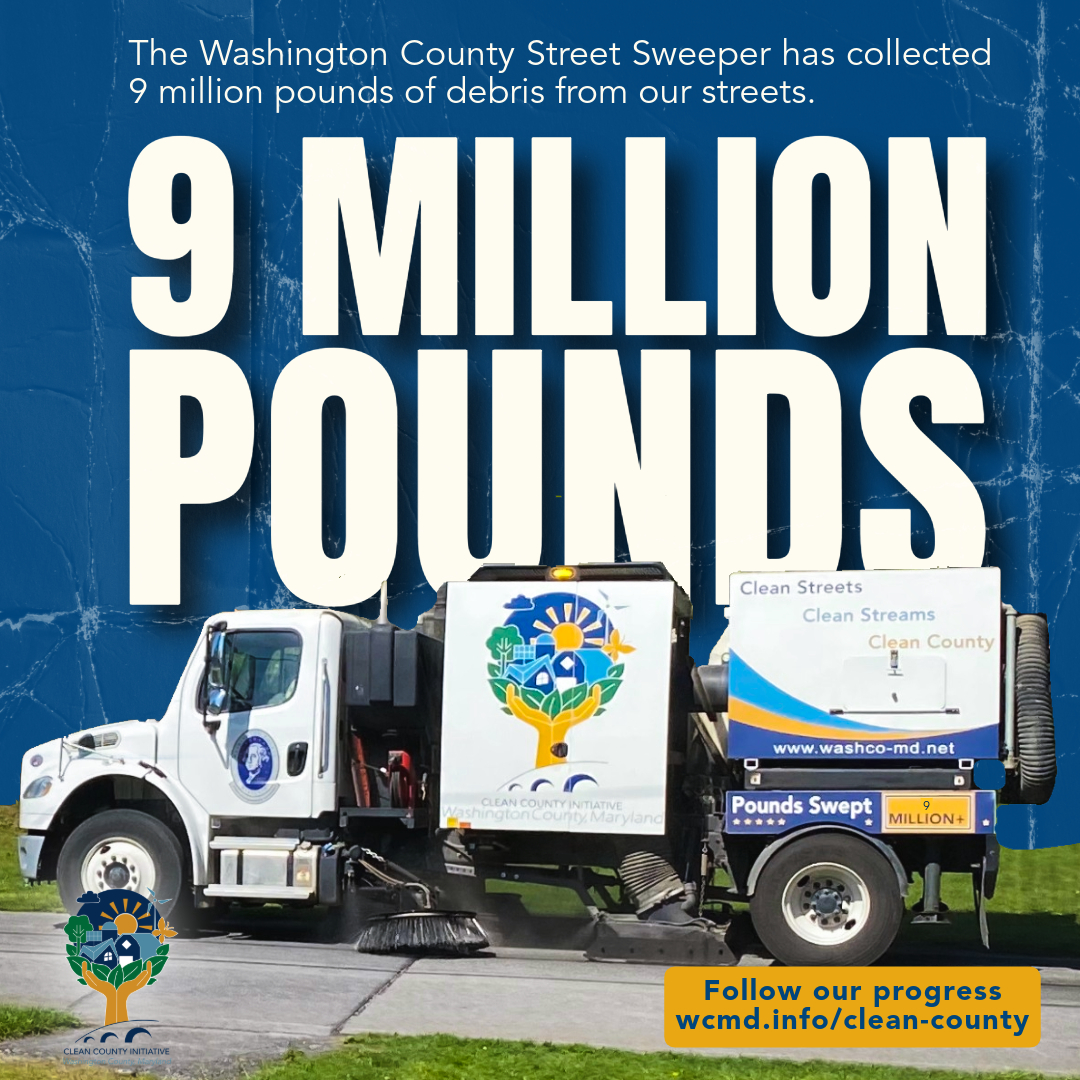
Washington County, Maryland is a great example of a community who has embraced street sweeping as an effective and cost-efficient non-structural stormwater practice. Information on Washington's street sweeping and stormwater program is highlighted below:
- Street Sweeper Truck Washington County has developed a program for cleaning roads in urbanized areas by street sweeping and through stormwater inlet clean outs.
- The amount of pollution capture assocated with 200 Miles of Street Sweeping is estimated 525 lbs. reduction in nitrogen, 210 lbs. reduction in phosphorus, 32 tons reduction in sediment
- These benefits of the street sweeper is to reduce credits for Chesapeake Bay and Local Watershed TMDLs and NPDES Permit credit.